※ Maximum output wattage when performed in master-slave control of parallel operation.
PXB Series
PXT Series
PWR-01 Series
PWX Series
PAV Series
PAT-T Series
PAG Series
PHP-T Series
PAN-E Series
PAN-A Series
PAD-LA Series
PMX-A Series
PMX-Multi Series
KDS6-0.2TR
PBZ Series
PBZ20-20A
PBZ SR Series
PBZ BP Series
PCR-WEA2R Series
PCR-WEA2 Series
PCR-MA Series
PCR-LE/LE2 Series
TOS9311
TOS9303LC
TOS9303
TOS9302
TOS9301PD
TOS9301
TOS9300
TOS5302
TOS5301
TOS5300
TOS5200
TOS7200
TOS7210S
TOS6210
TOS6200A
TOS3200
PXZ Series
PLZ-5W/5WZ Series
PLZ-5WH2 Series
PLZ-U Series
2026/06/10(Wed)
Fundamentals of Electrical Safety Testing
In this, my third article, I will discuss an experience I had when developing a bespoke device for a client. My brief was to modify a TOS series electrical safety tester to create a low-cost, dedicated hipot and insulation resistance tester that used direct current only.
Taking Apart a USB Hub When using a computer to operate electronic measuring equipment or power supplies, the various devices need to be able to communicate with each other. While consumer devices tend to connect wirelessly (using Wi-Fi or Bluetooth), it is still common for measuring equipment and power supplies for industrial use to use…
What does it really mean when someone tells you to “use your head”? In Japan, a TV show broadcast by the national broadcaster called Chikochanni Shikarareru is enjoying popularity. In the show, a five years old girl who named Chiko puts questions to the show’s grownup guests for testing on their knowledge of trivia in…
My story involves a heatsink selection that didn’t go exactly to plan.
In this article, I will share an episode that attests to the on-site problem solving abilities of Kikusui’s bespoke solutions team, of which I am a member. It all started with a phone call we received just before delivering a sophisticated and high-value system to one of our clients.
No Shortcut to Learning My principal role at the moment involves providing technical support for Kikusui products. In order to be able to handle the range of enquiries I receive, I need a broad knowledge of not only Kikusui’s software and hardware products, but also of industry standards and jargon. Now, I graduated with a…
In this article, I will share a story about a charge/discharge tester that I initially dismissed as an easy project, only to run into problems later.
In a past “Solution Notes” article I covered solutions for breaking capacity tests for automotive fuses. In this article, I will share information on recent developments in the process to reform automotive fuse standards.
Kikusui’s products do not stand alone. Rather, they must work with the client device to which they are connected. My work therefore does not end with the installation of a system. Rather, a project is only complete when the system is tested connected to the object under test, and thereby integrated with the client’s equipment. In this job, having detailed information on the client’s circumstances (the client’s equipment and devices) in advance makes a big difference.
Today’s story is about a problem I encountered in the past when performing value analysis. Stuck in the mindset that VA just meant eliminating excess, I took things too far.
In the world of software processing capability, speed is an “absolute good” – you could describe it as the most important metric. On a machine equipped with a modern CPU and plenty of RAM, a program that accesses simple data types in small quantities will probably run just fine. However, when dealing with programs that handle large amounts of data, the program’s architecture (high level design and design philosophy) has a clear impact on processing speed.
These days I often find myself reflecting on just what a unique task circuit design is.
Work calls for a range of skills, such as planning, decision-making, negotiation, conceptualization, communication, problem-solving, consideration, the ability to learn from your mistakes, the ability to ask questions, imagination, creativity, judgement, logical thinking… the list goes on. Today I will be discussing concentration.
When you have worked with bespoke orders and modifications for as long as I have, you are bound to have encountered a few unusual requests that leave you scratching your head. At Kikusui, we accept any special order that is technically feasible, provided we can agree on budget, although we sometimes find ourselves building devices based on technical specifications alone without knowing what they will actually be used for. In this series I will discuss some unusual bespoke projects I have encountered at Kikusui, while maintaining our clients’ confidentiality, of course. Today’s instalment concerns a silicone-free power supply I worked on 20 years ago.
For professional people, having confidence in ones work is very important. However, confidence may also be described as a type of presumption. When you are overly confident, you tend to assume that your work (or your part of a project) contains no problems, and therefore that any issues must have been caused by others. It is all too common to well-meaningly involve all related parties when a problem arises, only to realize that you were in fact at fault and be forced to apologize. Therefore, while confidence is a necessary quality for professional people, this is a double-edged sword, as confidence can also be the cause of problems too.
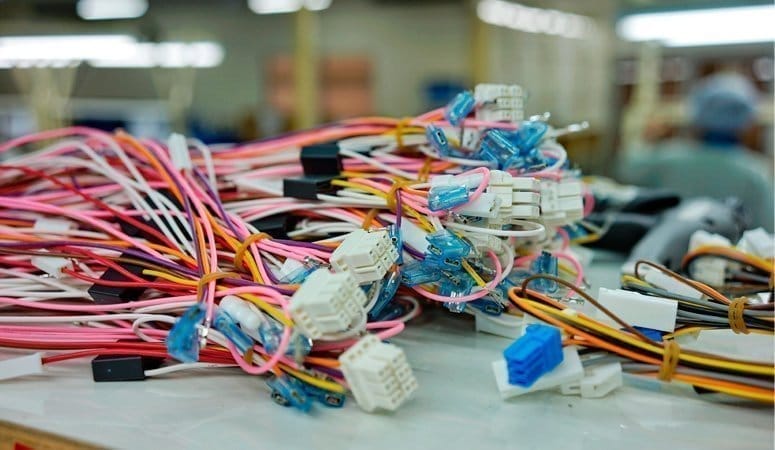
I’ll be discussing the art of building wire harnesses.
Today’s article concerns rotary switches, also known as rotary selector switches─those old-fashioned dials that you turn with your fingers. While increasingly uncommon in today’s digital age, rotary switches one featured in a wide range of electrical appliances.
In this article, I will discuss how my perspective has changed as a result of my working environment.
These days, we hear a lot about revival of retro technologies like the cassette and the film camera. Personally, as someone who is obsessed with analog power supplies, I am hoping that the retro trend will see the return of the “dropper-type” power supply.
During my several decades at Kikusui working with custom products, I have gained experience with a range of different products, but I have also had my fair share of setbacks. My tendency to lecture the younger members of my team is the result of lessons I learned the hard way when I was younger. In fact, my experience with overcoming obstacles is an important part of who I am today.
In this column, I discuss my experiences with devices I have worked with.
I am a bespoke engineer with Kikusui’s System Technology Group. While earlier in my career I was involved with our standard (off-the-shelf) range, I have now actually spent longer working with bespoke devices. In this series, I discuss various aspects of bespoke engineering.
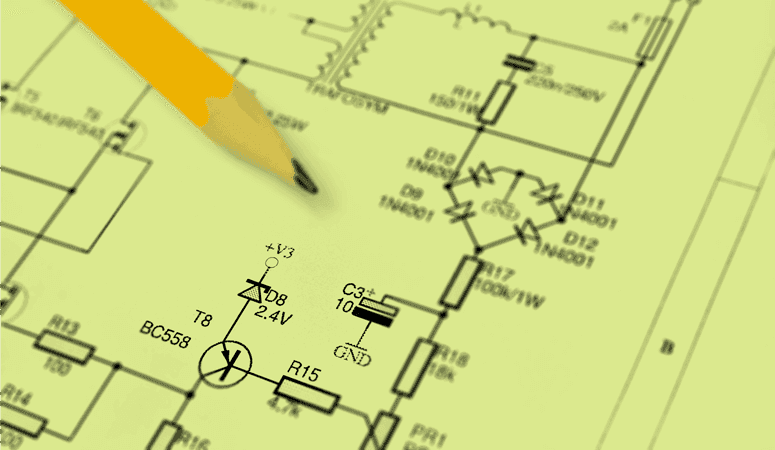
Circuit diagrams are important because the quality of the diagram not only has a significant bearing not only on the manufacturing process but also on the efficiency with which modifications can be designed and implemented. In this article, I will talk about two experiences that prompted me to rethink my attitude to schematics.
An installer is a tool used to install software on a computer. While some simpler software applications can be installed simply by copying the relevant .exe (executable) file into the Program Files folder, in cases where there is a need to write to the computer’s registry or libraries, an installer is required. Today’s story involves an experience I had with an installer I wrote for a piece of software.
To begin with, when we first build a circuit and apply an electric current to it, a quite common experience is for us to find that it doesn’t work, and ask ourselves why not. We then set about checking and rethinking the circuit configuration and components, but can’t quite find a cause that seems to fit. What are the key points that we should be questioning in those kinds of situations? That is the main topic of this article.
A Thorough Explanation of Hipot, IR, Ground Bond, and Leakage Current Testing